The interior design trends 2026 homeowners are embracing look nothing like the staged, photography-ready spaces of the previous decade. People are designing for how they actually live, not for how their home looks in a photo.
For Lehigh Valley homes, with their mix of colonial character, Victorian detail, and newer construction, that shift is opening up some of the most interesting design directions available right now. Here is what is actually happening.
What Is the Dominant Interior Design Trend in 2026?
The defining theme of interior design trends in 2026 is comfort over performance: spaces designed for real life rather than for the appearance of perfection.
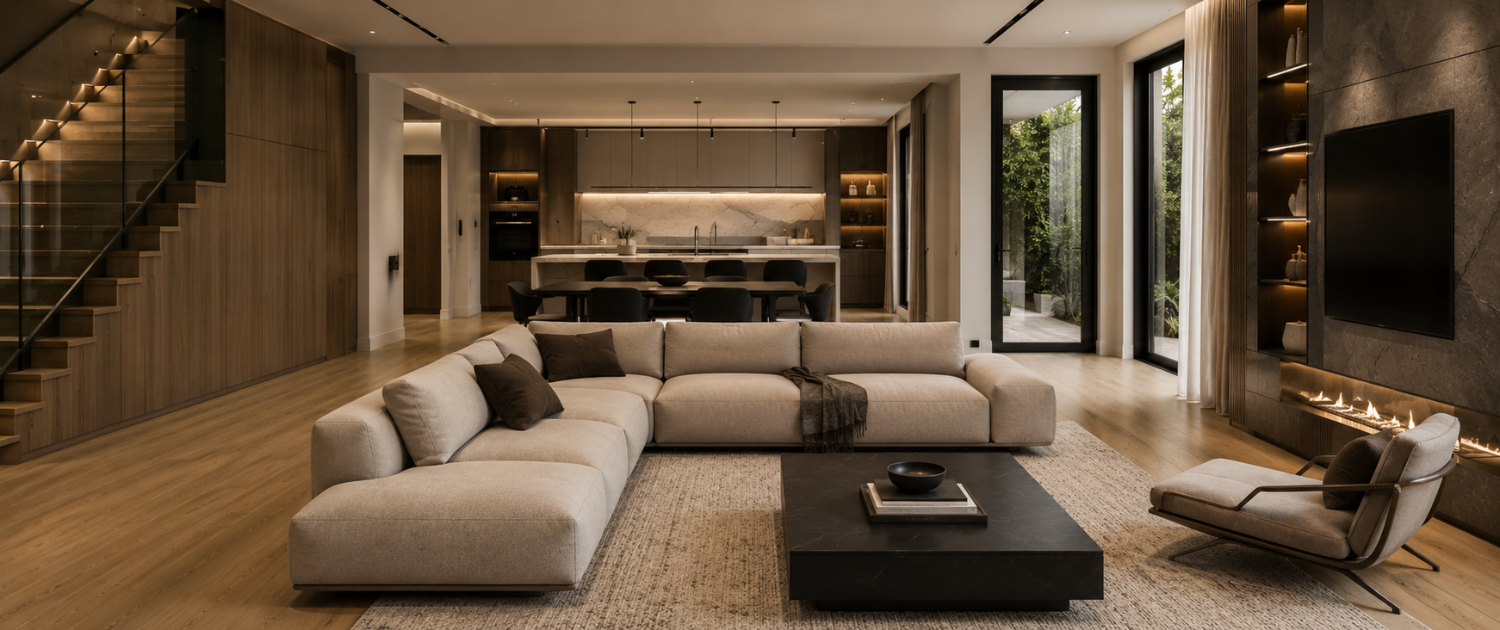
Cool grays, stark white walls, and rigidly minimal interiors are fading. In their place, homeowners are choosing warm earthy palettes, natural materials, and layered textures. Whether that means biophilic, Japandi, eclectic, or warm minimalism, the common thread is authenticity.
In 2026, the top interior design trends center on warmth, natural materials, and personal expression. The styles leading that shift are biophilic design, Japandi, eclectic interiors, warm minimalism, and transitional design. All of these work especially well in Lehigh Valley homes.
The 2026 Design Styles Reshaping Lehigh Valley Homes
1. Biophilic Design: Nature as a Design Decision
Biophilic design has moved well past the houseplant phase. In 2026, it is a whole-home philosophy that shapes material choices, lighting decisions, and spatial layout.
The Lehigh Valley sits within a landscape of rolling farmland, wooded ridgelines, and stone architecture. Biophilic interiors that reference those elements feel locally grounded rather than trend-driven.
What biophilic design looks like in a Lehigh Valley home:
- Natural stone countertops and accent surfaces including quartzite, honed slate, and raw limestone
- Reclaimed wood beams, wide-plank oak floors, and live-edge furniture pieces
- Large windows treated minimally to maximize natural light
- Organic textures in upholstery such as linen, boucle, wool, and rattan
This trend pairs naturally with Lehigh Valley’s existing stone foundations, mature landscaping, and four-season light conditions. For a deeper look, the biophilic design guide covers the full approach.
2. Japandi: The Style That Earns Its Popularity
Japandi, the fusion of Scandinavian warmth and Japanese restraint, has remained one of the most consistently searched interior design styles through 2025 and into 2026. It solves a problem most homeowners share: how to create a space that is calm without being cold, edited without feeling empty.
- Wabi-sabi: Embracing imperfection and the honest quality of materials over time
- Functional simplicity: Every element serves a purpose; decoration for its own sake is edited out
- Warm neutrals: Creamy whites, warm grays, soft sage, and natural wood tones
- Craft over mass production: Handmade ceramics, solid wood furniture, and artisan textiles
Japandi works especially well in bedrooms and living rooms where genuine rest and decompression are the goal. Removing what does not need to be there is usually the most impactful first step. The Japandi living room guide goes into room-specific applications in detail.
3. Eclectic Interiors: Curated, Not Chaotic
Eclectic interior design is having a significant moment in 2026. The key distinction is that eclectic does not mean random. The most successful eclectic interiors have a clear underlying logic: a consistent color story, a coherent material palette, or a shared sense of scale that ties pieces from different periods together.
What makes an eclectic interior work:
- A dominant style that governs 60 to 70 percent of decisions
- A consistent color palette that creates continuity across diverse pieces
- Artisan pieces, travel finds, and inherited furniture alongside newer purchases
For Lehigh Valley homeowners, the region’s architectural history and access to surrounding antique markets make this style particularly accessible. The eclectic interior design guide breaks this approach down with practical examples.
4. Warm Minimalism: The Middle Ground Most Homeowners Actually Want
Warm minimalism describes what most Lehigh Valley homeowners are instinctively moving toward, even when they do not have a name for it. It is not stark minimalism with cold white walls. It is not maximalism with layering for its own sake. It sits in the productive middle: edited and uncluttered but rich in texture, color depth, and material quality.
- Walls in warm, complex neutrals such as clay, warm sand, mushroom, and soft terracotta
- Texture doing the decorative work that pattern would do in a busier interior
- A reduced number of objects, each chosen with clear intention
This style has shown consistently strong engagement locally on the FFF Interiors blog, reflecting genuine homeowner interest. For the complete breakdown, the warm minimalism guide is the right starting point.
5. Transitional Design: Still the Most Requested Style in the Region
Among homeowners planning a full room redesign or renovation in 2026, transitional design remains the most frequently requested style across the Lehigh Valley. It sits between traditional and contemporary: warm enough to feel comfortable, clean enough to feel current.
For homes with existing architectural character such as crown molding, built-in shelving, and classic window proportions, transitional design is the natural choice. The full Interior Design Style Guide for Lehigh Valley Homes covers transitional design and all the major style directions in one place.
Why Interior Design Trends 2026 Feel Different
Interior design trends 2026 represent a genuine behavioral shift, not just an aesthetic one. For most of the past decade, design choices were shaped by social media imagery: spaces optimized to photograph well rather than to support daily life. The result was beautiful but impractical interiors that many homeowners found exhausting to maintain.
What is different now is that homeowners are making decisions from lived experience. They are asking whether a space works on a busy weeknight, not just whether it looks good on the weekend. That shift in priority connects every major trend this year.
What Else Is Shaping Home Design in 2026
Beyond the dominant styles, several broader shifts are showing up consistently this year.
Color-drenching involves painting walls, ceilings, and trim in the same tone to create immersive, atmospheric rooms. Searches for ceiling painters are dramatically up in 2026, signaling that homeowners are treating the fifth wall as a genuine design surface.
Curved furniture and soft silhouettes are replacing the sharp geometries of the previous decade. Rounded sofas, arched doorways, and sculptural accent chairs soften rooms and pair naturally with warm color palettes and natural materials.
Defined zones within open plans are returning as homeowners reconsider the fully open floor plan. Furniture, rugs, lighting, and partial dividers now create reading corners, conversation areas, and quiet work zones within shared spaces without touching a single wall.
For homeowners working with a Lehigh Valley interior designer, these shifts provide a practical framework for decisions that feel right in five years, not just today.
To book a consultation and discuss how these directions apply to your specific home, visit the contact page.