
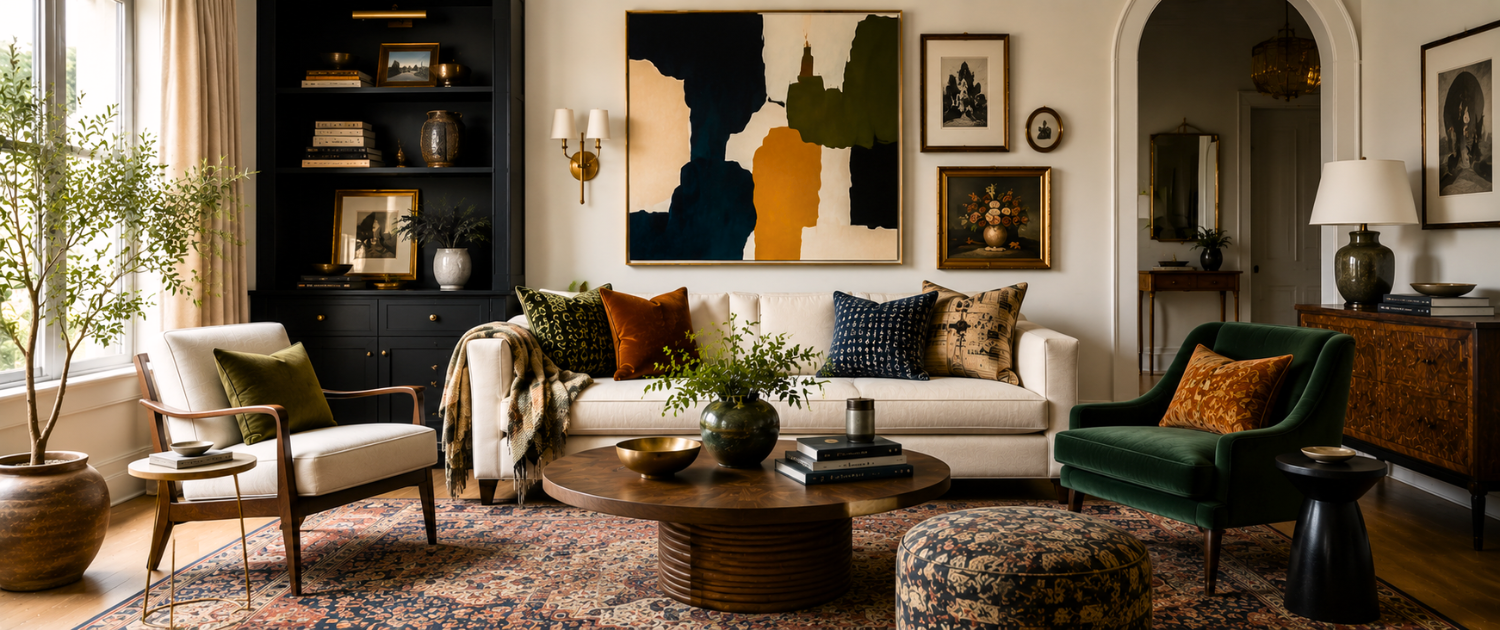
Most homeowners who love eclectic style hit the same wall. They mix a vintage chair with a modern sofa, layer in a patterned rug, add collected art, and end up with a room that feels cluttered rather than curated. The difference between an eclectic home that feels intentional and one that feels accidental comes down to structural decisions made before anything is purchased.
Q: What is eclectic interior design and how is it different from just mixing things together?
Eclectic interior design is the deliberate combination of styles, periods, textures, and influences into one cohesive space. Random mixing produces visual noise. Eclectic design produces personality. The difference is a unifying thread: color, material, scale, or mood that connects everything even when pieces come from different design worlds.
Eclectic interior design is not a style in the traditional sense. It borrows from multiple styles without belonging to any single one. What separates rooms that work from those that do not is always the same: structure beneath the variety.
The Rules That Make Eclectic Design Work
Eclectic design looks ruleless but it is not. The mix feels bold, but there is always structure behind it through layout, repeated tones, or how objects are grouped. Three foundations make it work:
- One unifying thread runs through everything
Without coherence, eclecticism becomes chaos. Define a unifying element: a recurring color, a dominant material, or a general mood. That thread could be a warm wood tone in the coffee table, frames, and a side chair, or a color repeating in the rug, a pillow, and art. It just needs to exist.
- Scale and proportion stay consistent
You can mix a Victorian armchair with a mid-century sofa, but pieces that are visually mismatched in scale destroy harmony. Keeping scale consistent across different style periods is what makes blending design styles look intentional.
- Negative space is respected
Every strong piece needs room around it. Avoid clutter to let standout pieces breathe. Without breathing space, even a beautifully curated collection reads as overcrowded.
How to Start an Eclectic Living Room Design
The most common mistake is starting with too many pieces and trying to make them work together. Start with one statement piece and build around it with restraint so the space feels layered, not chaotic.
Pick the piece that matters most. A sofa, a cabinet, a piece of art. Let that anchor every other decision. What colors does it carry? What material? What scale? The answers become your buying criteria for every other piece in the room.
Mixing Styles Without Losing Cohesion
Here is where most guides oversimplify.
| What You Are Mixing | What Keeps It Cohesive |
| Vintage and modern furniture | Shared wood tone or metal finish |
| Different textile patterns | Consistent color family across all patterns |
| Multiple art styles | Consistent frame finish or spacing rhythm |
| Various cultural influences | One dominant mood: warm, minimal, dramatic |
| High and low price points | Scale and proportion aligned across all pieces |
A mid-century coffee table can complement a traditional sofa when they share wood tones or proportions. The style period matters less than the visual conversation the pieces have with each other.
The Eclectic Design Checklist
Before adding anything new, run through this:
- Does this piece share at least one characteristic with something already in the room: color, material, finish, or scale?
- Does the room still have breathing space after adding it?
- Is there one clear focal point the layout anchors around?
- Does the overall mood remain consistent?
- Does the unifying thread repeat at least three times throughout the space?
If two or more answers are no, the room needs editing before adding more.
What Eclectic Design Is Not
Eclectic interior design is frequently confused with maximalism and bohemian style. They overlap but are not the same. Eclectic design has no style loyalty. It borrows from anywhere as long as the result is cohesive and personally meaningful. Each piece holds meaning, whether it is a travel souvenir, an heirloom, or a modern statement piece. That meaning separates a curated eclectic home from a room that simply has a lot going on.
Applying Eclectic Design in Lehigh Valley Homes
Older homes across Allentown and the Lehigh Valley, including colonials, split-levels, and ranchers, work particularly well as a base for eclectic design. Existing moldings, original hardwood floors, and period windows provide the structural foundation. Layering contemporary pieces against that backdrop creates personalized interiors that feel rooted rather than assembled.
At FFF Interiors, eclectic projects often begin with what the home already has. The existing architecture sets the first thread. If you are rethinking how your rooms flow before committing to a style direction, the broken floor plan guide covers how layout decisions affect every design choice that follows.
Conclusion
Eclectic interior design works when it is structured beneath the surface. A unifying thread, consistent scale, and intentional negative space turn different pieces into a room that feels curated and personal. Without that structure, the same pieces become visual noise. The goal is not to follow a style but to build one that reflects how you actually live. FFF Interiors offers design consultations for homeowners across Allentown PA and the Lehigh Valley to help develop that direction.