
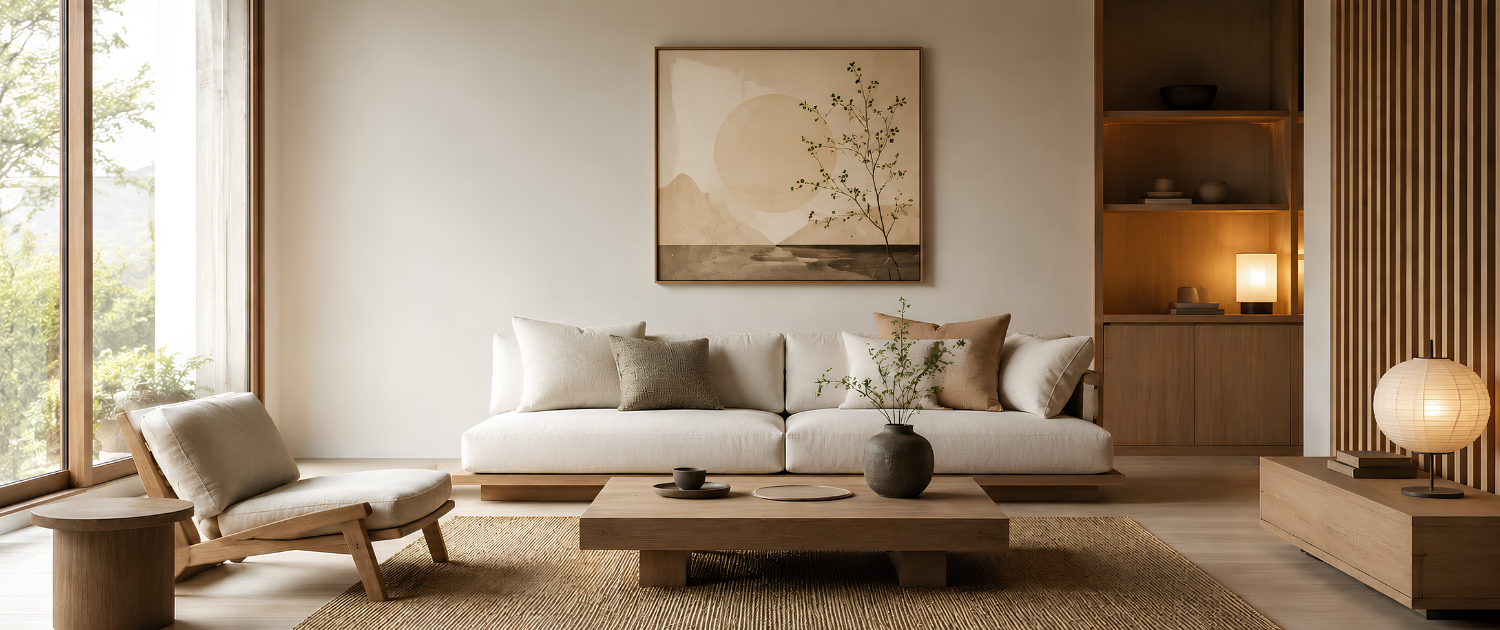
There is a reason Japandi has become one of the most searched interior design styles in the United States. It is not a trend built on bold statements or dramatic transformations. It is a design philosophy built on calm, intention, and the quiet confidence of a space where everything belongs. A well-executed japandi living room does not try to impress. It simply feels right the moment you walk in.
The appeal is deeply practical for American homeowners tired of spaces that feel cluttered, cold, or visually overwhelming. Japandi brings together the warmth of Scandinavian design and the disciplined minimalism of Japanese aesthetics into a space that feels both beautiful and genuinely livable. At FFF Interiors, we work with homeowners across the Lehigh Valley to create rooms that capture exactly that balance, calm without being empty and minimal without feeling sterile.
Common Question Asked
Q: What Are the Best Japandi Living Room Ideas for a Calm and Minimal Space?
The best japandi living room ideas focus on warm neutral color palettes, natural materials, low-profile furniture, and intentional restraint in decor. Every element is chosen with purpose. The result is a space that feels visually calm, physically comfortable, and genuinely beautiful without relying on excess or decoration for its impact.
Understand What Japandi Actually Means Before You Design
Japandi is not simply a mix of Japanese and Scandinavian furniture placed in the same room. It is a specific design language with its own rules. Japanese design contributes discipline, restraint, and a deep respect for natural materials. Scandinavian design adds warmth, softness, and coziness that prevents the space from feeling cold.
The result is a living room that feels quiet but alive. Minimal but warm. Functional but beautiful. Getting this balance right requires intentional decision-making at every stage, from the color palette and furniture selection to lighting and the deliberate editing of what does and does not belong in the space.
Build the Foundation With a Warm Neutral Color Palette
Color is where every successful japandi living room begins. The japandi color palette stays firmly within warm, earthy neutrals. Soft whites, warm taupes, muted sage greens, warm grays, and natural wood tones form the core. These colors create the sense of calm that defines the style and ensure the space photographs beautifully in any light condition.
The key rule is restraint. Limit the palette to two or three core tones and let natural materials provide the visual variation. Introducing too many colors, even neutral ones, creates a visual busyness that works against everything this style is trying to achieve.
Choose Low-Profile Furniture That Grounds the Space
Furniture scale and proportion are critical in a japandi minimalist living room. Low-slung sofas, floor-level seating, and pieces with clean simple lines all contribute to the grounded, calm feeling that defines the style. The visual weight of a room drops when furniture sits closer to the floor, creating openness even in smaller spaces.
Choose pieces in natural materials wherever possible. Oak, walnut, linen, wool, and cotton all belong here. Avoid shiny finishes, synthetic fabrics, and ornate detailing. Every furniture piece should feel like it was chosen for both its function and its contribution to the overall calm of the room.
Let Natural Materials Do the Decorating
One of the most distinctive characteristics of this style is the way natural materials replace decorative excess. A raw oak coffee table, a linen sofa, a woven rattan pendant light, and a ceramic vase on a shelf are all the visual interest the space needs.
This approach requires confidence. Many homeowners feel the impulse to add more when a room feels spare. In a japandi style living room, that impulse is worth resisting. The beauty of natural materials becomes more visible and more impactful precisely because it is not competing with anything else.
Layer Texture to Add Warmth Without Adding Clutter
Texture is the tool that prevents the space from feeling cold or clinical. A chunky wool throw draped over the arm of a sofa, a woven jute rug underfoot, linen cushions in tones that echo the wall color, and the grain of a natural wood surface all contribute warmth and depth that the eye reads as comfort without reading as clutter.
The layering should feel effortless. Nothing should look deliberately placed or styled for effect. This is one of the most important japandi living room ideas to execute well, because the difference between a space that feels warm and one that feels overdone often comes down to a single textile decision.
Control Lighting to Shape the Atmosphere
Lighting in this style should feel warm, soft, and layered. Harsh overhead lighting works against everything Japandi is trying to achieve. A combination of floor lamps with warm bulbs, pendant lighting in natural materials like rattan or paper, and low table lamps creates the kind of diffused atmospheric light that makes the space feel genuinely serene in the evening hours.
Natural light matters equally during the day. Keep window treatments minimal and in natural fabrics that filter rather than block light. Sheer linen panels that soften daylight while maintaining a connection to the outside world are a consistent feature in the best japandi living room designs.
Edit Ruthlessly and Display With Intention
Perhaps the most challenging and most rewarding aspect of creating this style is the editing process. A single piece of carefully chosen artwork, three ceramic vessels of varying heights on a shelf, and a stack of books with a considered object placed on top create focal points without creating noise.
The editing process is ongoing. Spaces tend to accumulate over time as the instinct to add more reasserts itself. The homeowners who maintain the calm that makes Japandi so beautiful are the ones who regularly remove as much as they add, treating restraint as the defining design skill the style demands.
Why Japandi Works So Well for American Living Rooms in 2026
Trendy living room design in 2026 is moving away from maximalism and toward spaces that genuinely support rest, focus, and wellbeing. Japandi delivers all of that while remaining visually compelling and deeply personal when executed with care.
It also scales beautifully across different room sizes and budgets. A small urban apartment and a larger suburban living room can both achieve a successful aesthetic with the right approach to color, materials, and furniture selection. The style rewards thoughtfulness over spending, making it one of the most accessible design directions available to homeowners today.
How FFF Interiors Brings Japandi Design to Life
Executing a japandi living room that truly achieves the calm, beautiful balance this style promises requires more than inspiration. It requires an understanding of how materials, proportions, color, and light work together as a system, and the discipline to make editing decisions that most homeowners find difficult on their own.
As a trusted interior designer Allentown PA, FFF Interiors brings the expertise and objective perspective needed to design spaces that feel authentic rather than assembled. Working with a lehigh valley interior designer who understands the Japandi philosophy ensures every detail is handled with the care and precision the style demands. If you are ready to bring genuine calm into your living room, we are ready to help.
Conclusion
A japandi living room is one of the most rewarding spaces a homeowner can create. It asks for restraint, rewards patience, and delivers a level of calm and beauty that more decorative styles rarely achieve. The ideas outlined here are not a checklist to complete but a set of principles to apply with intention and consistency.
When every element is chosen with purpose and edited with discipline, the result is a space that feels genuinely different. Quiet, warm, beautiful, and completely at ease with itself. That is what Japandi delivers, and it is what great interior design makes possible for any home.