
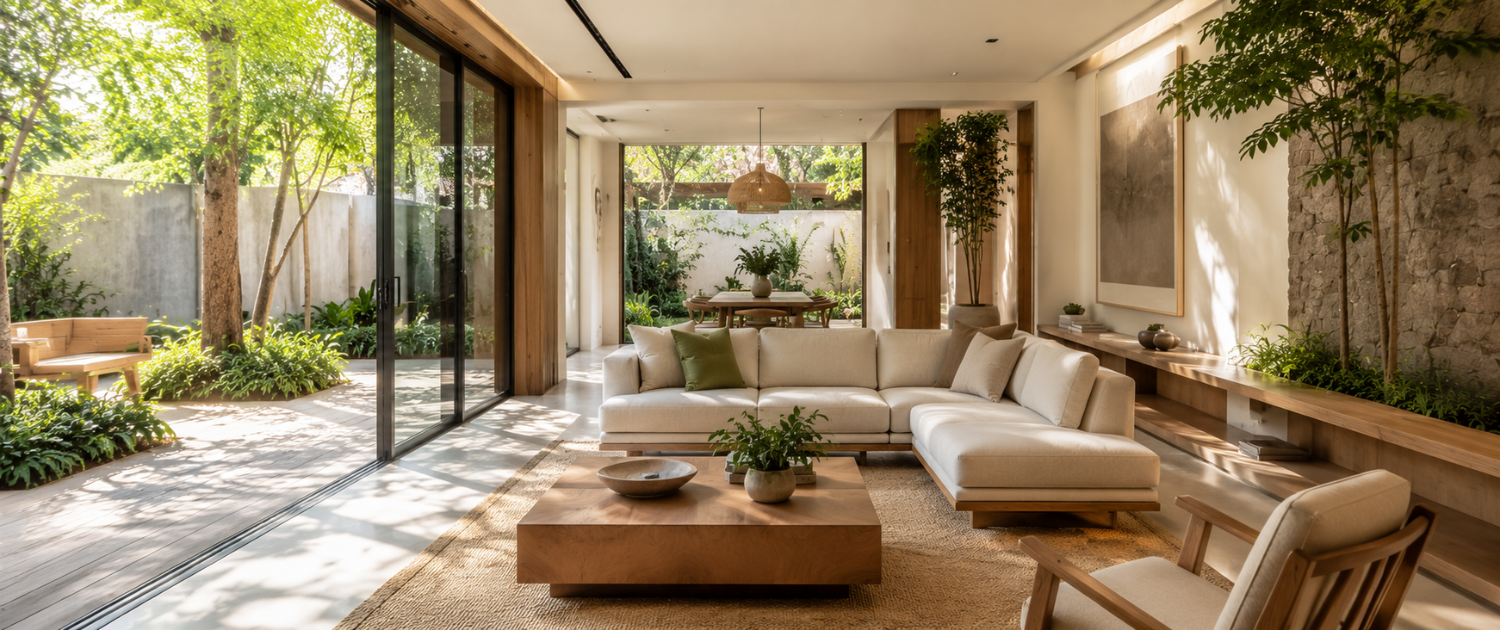
Most homeowners planning a renovation in 2026 have come across the term biophilic interior design. Some assume it means ad ding more houseplants. Others think it is a style trend that will fade. Neither is accurate, and understanding the difference matters before you make decisions that affect how your home feels for years.
This is not about aesthetics alone. It is about how the spaces you live in affect your daily wellbeing, and why more homeowners are treating that as a renovation priority.
Common Question Asked
Q: What is biophilic interior design?
Biophilic interior design is the intentional integration of natural elements into living spaces to support human wellbeing. It works through natural light, organic materials, vegetation, textures, and spatial connections to the outdoors. The goal is not decoration but a measurable improvement in how a space feels to live in daily.
Biophilic interior design means designing your home around nature, not just decorating with it. In a renovation, it shapes decisions about natural light, organic materials, indoor greenery, and how your living spaces connect to the outdoors. The result is a home that feels noticeably calmer, healthier, and more comfortable to live in every day.
Why Homeowners Are Prioritizing This in 2026
The shift toward biophilic home design in 2026 is not a trend cycle. It is a response to how people are actually living.
Remote work has made the home a permanent workspace for a large portion of households. Screens dominate daily life. Urban environments offer less access to green space. The result is that people are spending more consecutive hours indoors than before, and the quality of those indoor environments is having a measurable effect on focus, mood, and stress levels.
Research supports this directly. Studies show that natural elements in interior spaces can reduce cortisol levels, improve concentration, and create a sense of calm that artificial environments cannot replicate. Homes with documented biophilic features are currently achieving an 8% premium over comparable listings in major markets, which suggests buyers are recognizing the value even when they cannot articulate why a space feels better.
What Biophilic Design Actually Involves in a Renovation
This is where most articles oversimplify. Biophilic design in a real renovation context goes well beyond placing plants on shelves. It involves deliberate decisions at the planning stage about light, materials, layout, and how the home relates to its surrounding environment.
Natural light as a structural priority
Natural light in home design is one of the most impactful elements a renovation can address. Larger windows, repositioned openings, and skylights in darker rooms all change how a home feels throughout the day. Exposure to natural light regulates serotonin levels and sleep cycles, making these functional decisions with measurable daily benefits, not just aesthetic ones.
Materials that carry texture and character
The shift away from polished synthetic surfaces toward materials that feel alive is one of the defining characteristics of biophilic renovation in 2026. Reclaimed wood, raw stone, travertine, textured plaster, linen, and clay finishes create a tactile environment that synthetic materials cannot. Neuroaesthetic research confirms that natural textures generate comfort and emotional connection in ways smooth uniform surfaces do not.
Vegetation integrated into the architecture
Living walls, built-in planters, indoor trees, and herb gardens are moving from decorative objects to architectural elements. The distinction matters because it changes how a space is planned rather than how it is decorated after the fact.
Indoor and outdoor continuity
One of the more significant shifts in biophilic home design is connecting interior spaces to the outdoors through layout and sightlines. Patio extensions that align visually with interior spaces are becoming a core element of modern outdoor living design. glass walls that open onto gardens, and outdoor rooms that feel like continuations of the interior are all part of how this approach is being applied in residential renovations.
How This Applies to Pennsylvania Homes
Older homes across the Lehigh Valley, including colonials, split-levels, and ranchers, were typically built with smaller windows, compartmentalized rooms, and limited interior natural light. These structural characteristics make them strong candidates for biophilic renovation because the gap between how they currently feel and how they could feel is significant.
Maximizing natural light through window expansion, connecting enclosed rooms to outdoor spaces, introducing organic materials into kitchens and living areas, and selecting earthy palettes that reflect the regional landscape are all practical applications that work with the existing architecture rather than against it.
Pennsylvania’s four-season climate also shapes the approach. Materials need to perform through humidity and temperature variation. Choosing natural materials that age well and light solutions that work across seasons is what separates a biophilic renovation that holds up from one that looks dated within a year.
What It Is Not
Biophilic design is not a checklist. Placing a potted plant next to a grey sofa on a concrete floor does not create a biophilic space. The approach requires intentionality across multiple decisions, which is why it works best when built into the planning process from the beginning rather than applied as a finishing layer at the end.
It is also not a single aesthetic. Biophilic design looks different in a colonial in Bethlehem than it does in a modern townhouse. The principles remain consistent but the execution is always specific to the space, the structure, and the people living in it.
Conclusion
Biophilic interior design in 2026 is not a decorating style. It is a design philosophy that treats the quality of your indoor environment as directly connected to the quality of your daily life. For homeowners planning a renovation, understanding this distinction early shapes better decisions across every stage of the project. If you are considering a renovation and want to understand how these principles apply to your specific home, working with an experienced interior design firm in Allentown PA is the right place to start.