
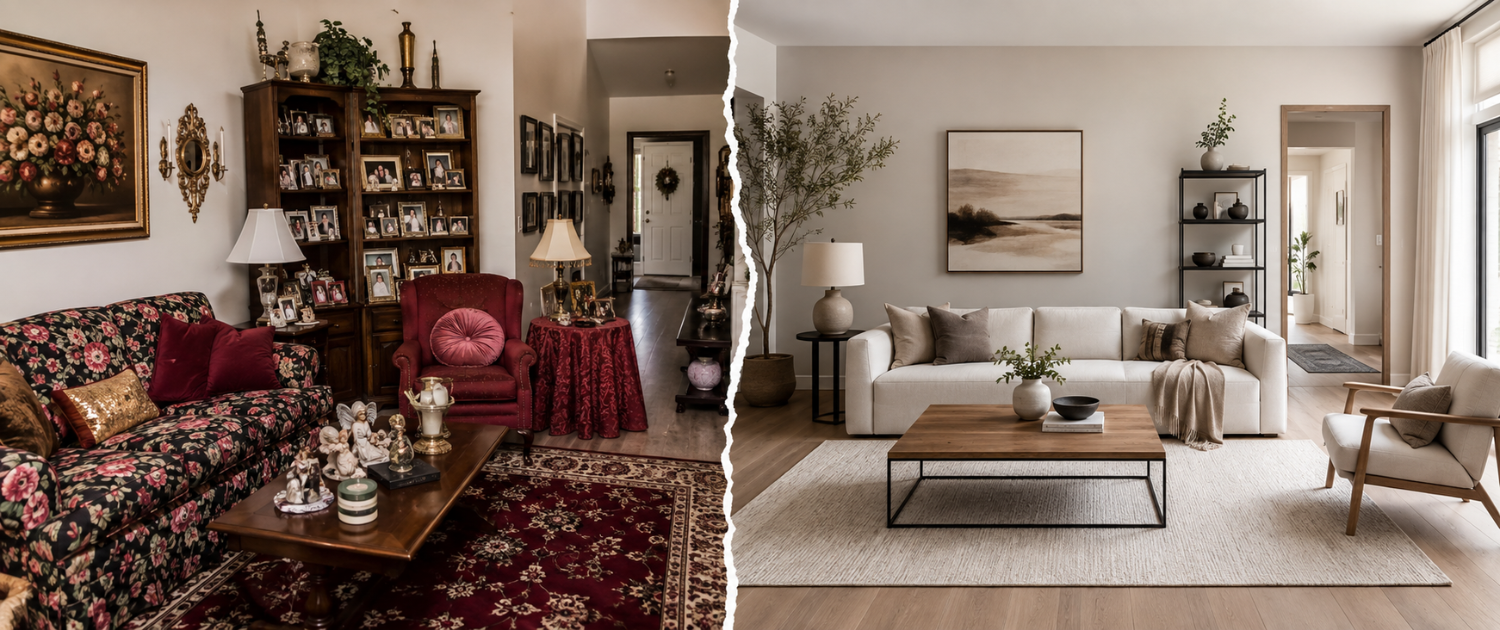
Nobody sets out to make their home look cheap. Tacky decor almost always starts as a good idea taken a step too far, a shortcut that seemed harmless, a trend that felt fresh two years ago and now just feels loud. Fixing it rarely means starting over. It usually means catching one or two choices before they undo everything else in the room.
What Makes Decor Feel Tacky Instead of Curated?
Tacky decor usually comes down to mismatched proportions, materials trying to fake something more expensive than they are, and too many competing choices in one space, rather than any single object being inherently wrong on its own.
A single bold piece rarely reads as tacky. It’s the accumulation, four unrelated ideas fighting for attention in the same room, that tips a space from personal into overwhelming. Most of the interior design mistakes on this list come down to exactly that, one choice too many left unedited.
Tacky decor almost always starts as a good idea taken a step too far. This piece focuses on the aesthetic side of that, if you’re also dealing with layout and furniture mistakes, that’s a related but separate problem worth checking too.
10 Tacky Decor Mistakes Worth Fixing First
1. Furniture That’s Too Small for the Room
Undersized furniture is one of the fastest ways to make a room look like it was decorated on a tight budget, even when it wasn’t. A loveseat swimming in a large living room, or a coffee table that looks like an afterthought next to an oversized sofa, throws off the entire sense of scale.
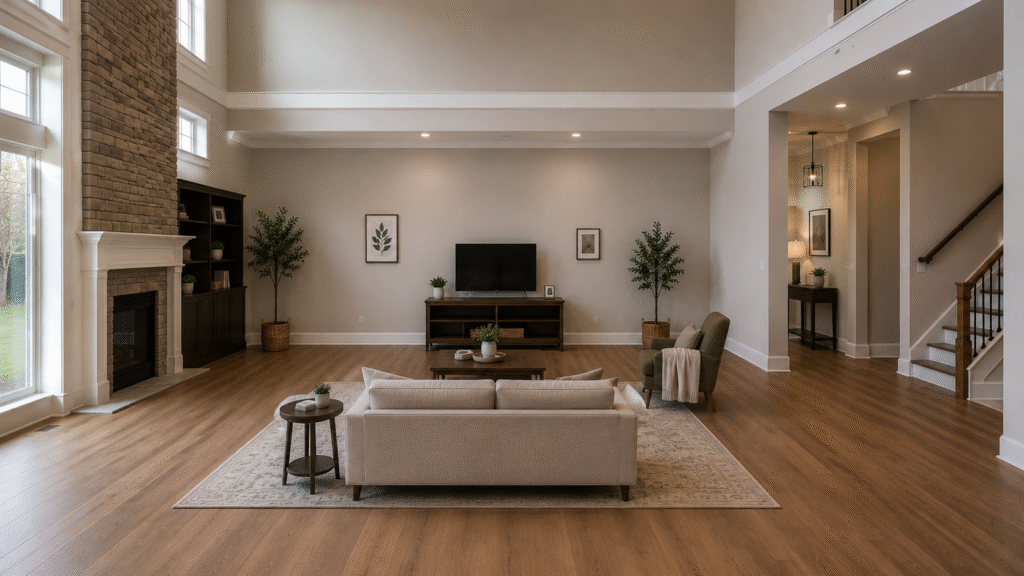
The fix: Measure the room before shopping, not after, and choose pieces sized to fill the space with intention.
2. Rugs That Don’t Anchor the Furniture
This is one of the most common home decor mistakes we see walking into a first consultation. A rug too small for the seating arrangement makes furniture look like it’s floating, disconnected from everything around it.
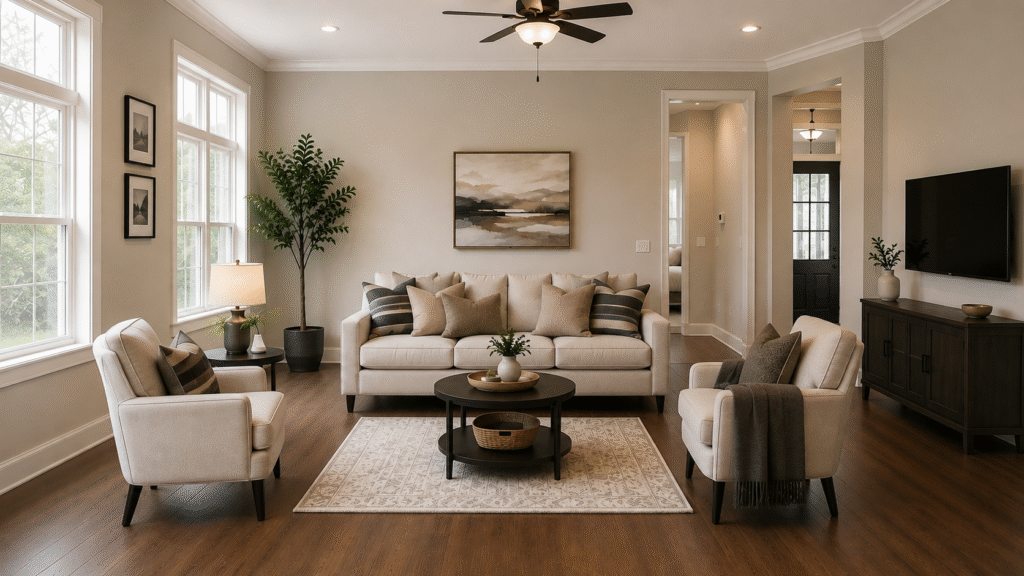
The fix: All front legs of major furniture pieces should rest on the rug, at minimum.
3. Painted Surfaces Trying to Mimic Real Material
Countertops painted to look like marble, laminate stained to resemble wood grain, these DIY shortcuts rarely fool anyone up close, and the attempt often reads worse than an honest, simpler surface would have.
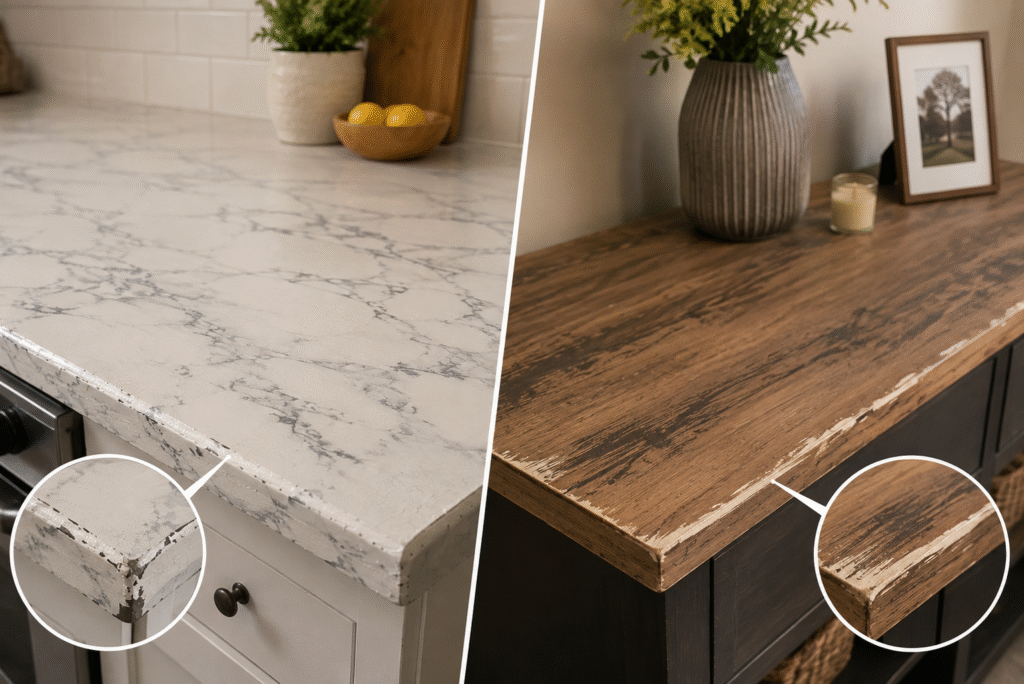
The fix: If the budget can’t stretch to the real material yet, choose an honest, affordable alternative instead of an imitation.
4. Matchy-Matchy Furniture Sets
A living room furnished entirely from one showroom set, same wood tone, same upholstery, same finish throughout, reads as staged rather than lived in. It’s one of the clearest signs of tacky home decor, even when every individual piece is genuinely nice.
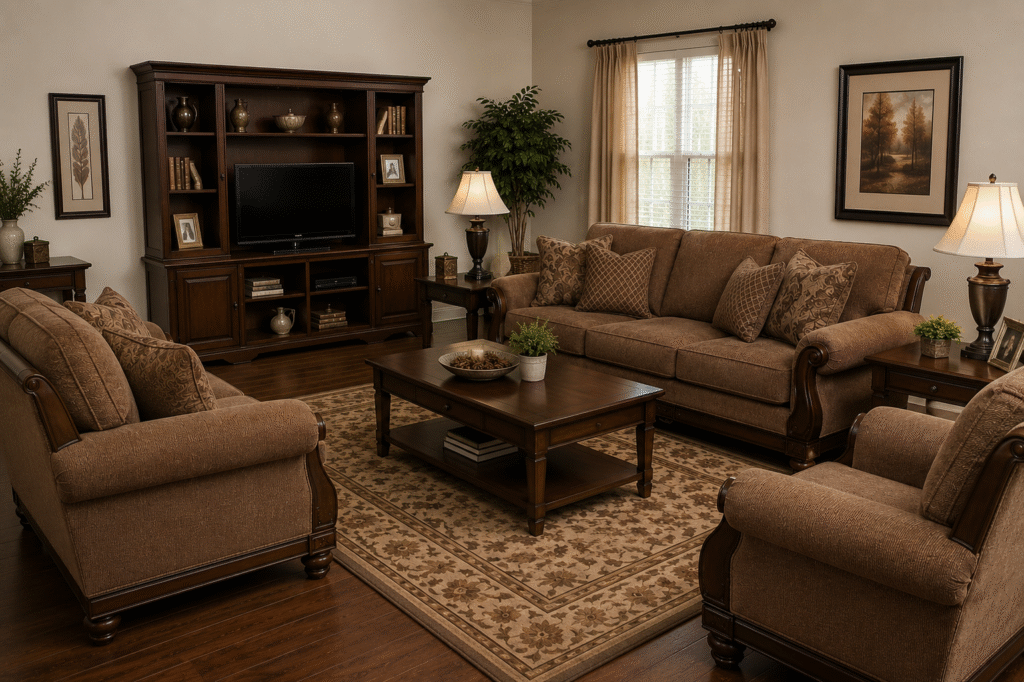
The fix: Break up a matched set with one or two pieces from a different source, era, or material.
5. Peel-and-Stick Everything
Peel-and-stick tile and wallpaper have their place, but in high-traffic rooms, lifted seams and misaligned patterns show up fast and read as tacky decorations rather than a clever shortcut.
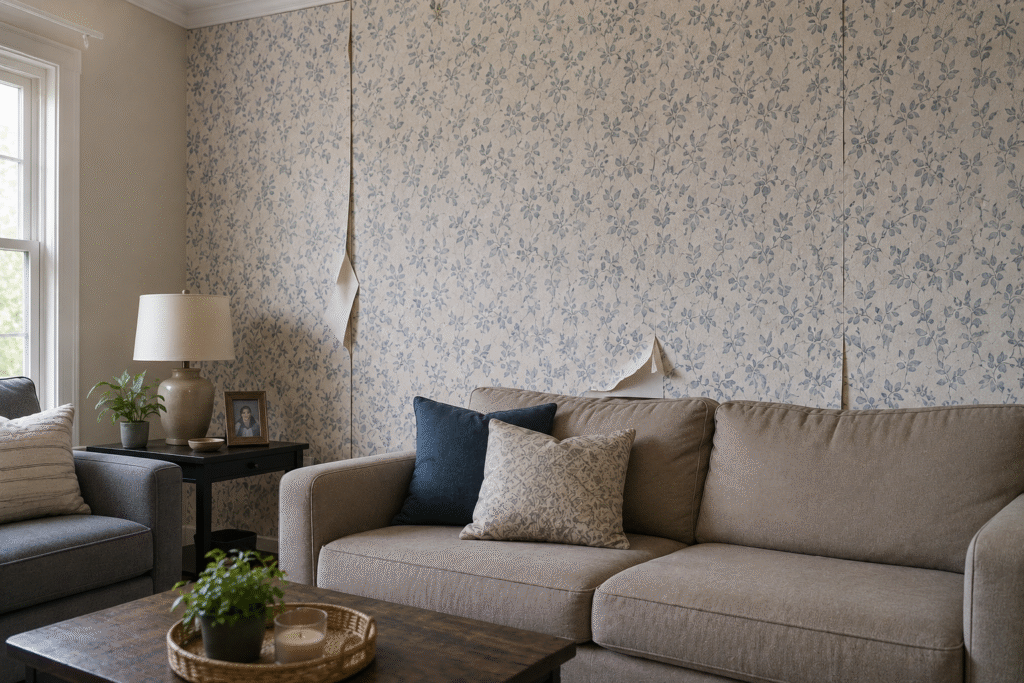
The fix: Reserve peel-and-stick materials for low-traffic accent spots, not the rooms your family uses daily.
6. One Flat Paint Color Throughout
A home painted a single shade wall to wall can feel strangely anonymous, like nobody actually lives there. There’s real psychology behind why, color affects mood in ways a flat, unvaried palette simply can’t deliver.
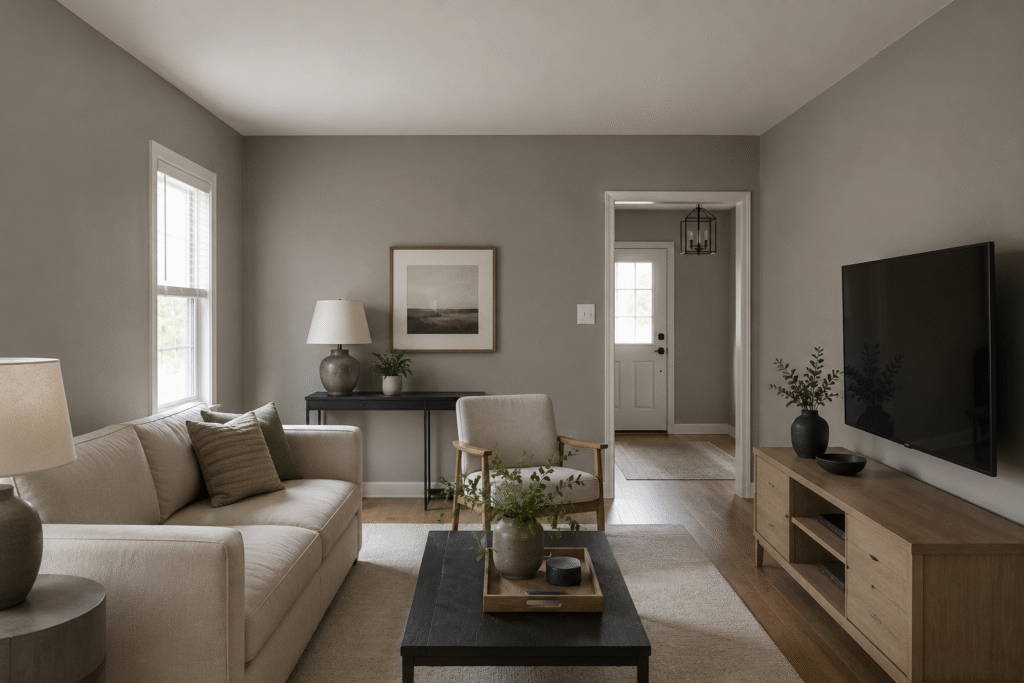
The fix: Let color shift room to room, and vary the finish where it makes sense, matte in a bedroom, something with more sheen in a hallway.
7. Word Art and Novelty Signage Everywhere
A single meaningful sign can add warmth. A wall covered in mass-produced inspirational phrases starts to feel like a gift shop rather than a home.
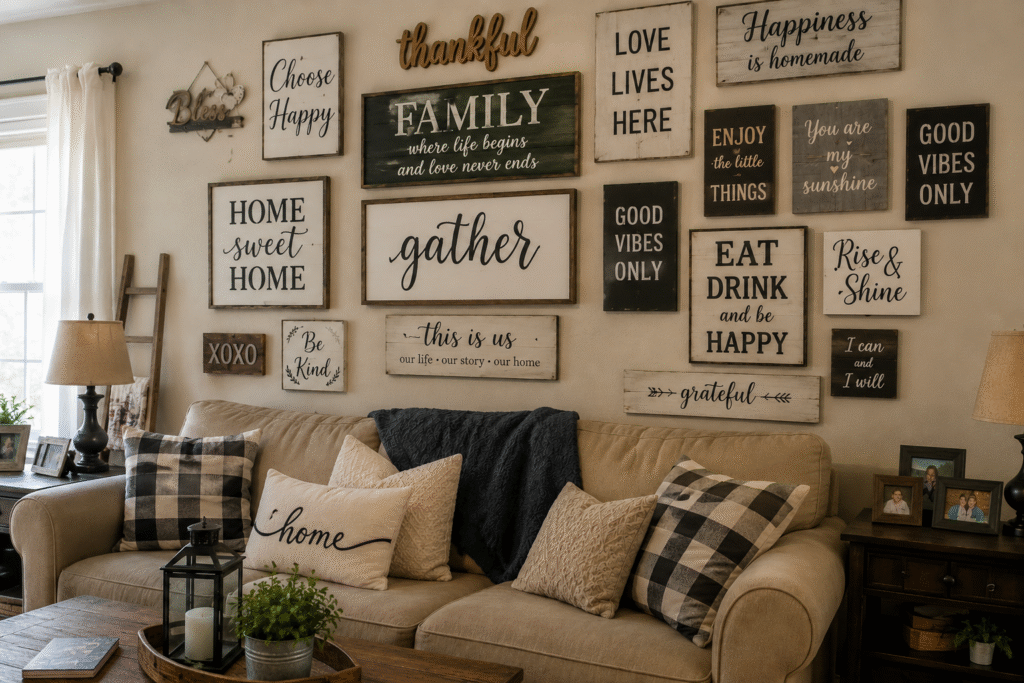
The fix: Choose one or two pieces that genuinely mean something, and let the rest of the wall breathe.
8. Gallery Walls With No Real Theme
A gallery wall thrown together from whatever prints were on sale rarely reads as curated. Without a connecting thread, color, subject, frame style, it reads as cluttered decor instead of a real collection.
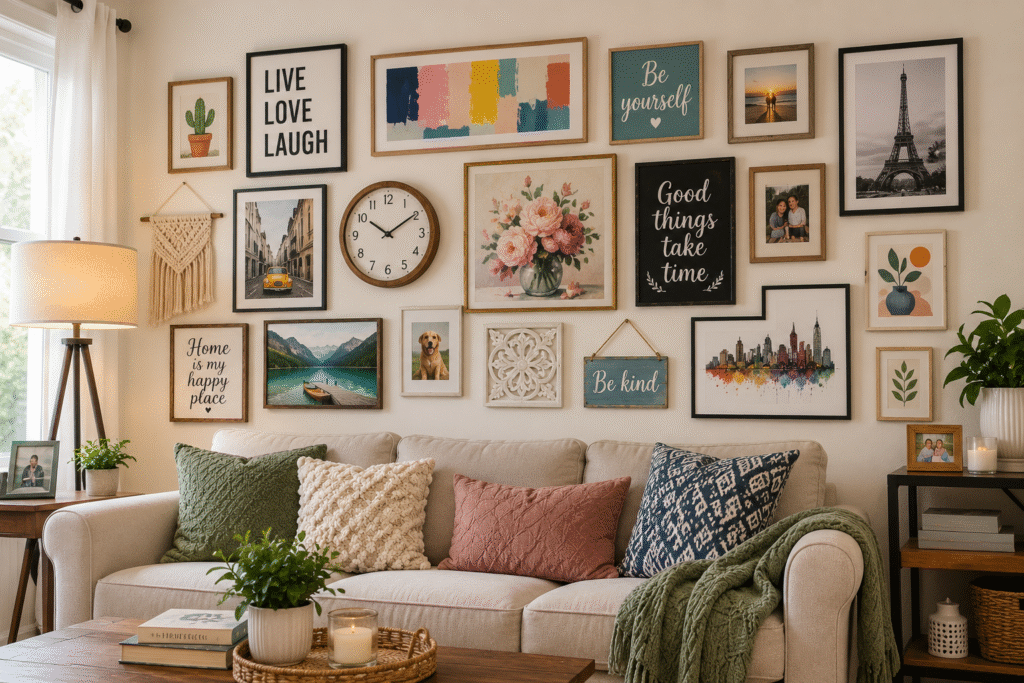
The fix: Pick one unifying element before hanging anything, then build the wall around it.
9. Outdated Wallpaper Choices
Wallpaper trends move fast, and a pattern that felt current a few years ago can quietly date an entire room. If you’re unsure whether your current wallpaper has aged well, our full breakdown of outdated wallpaper styles is worth a look before your next refresh.
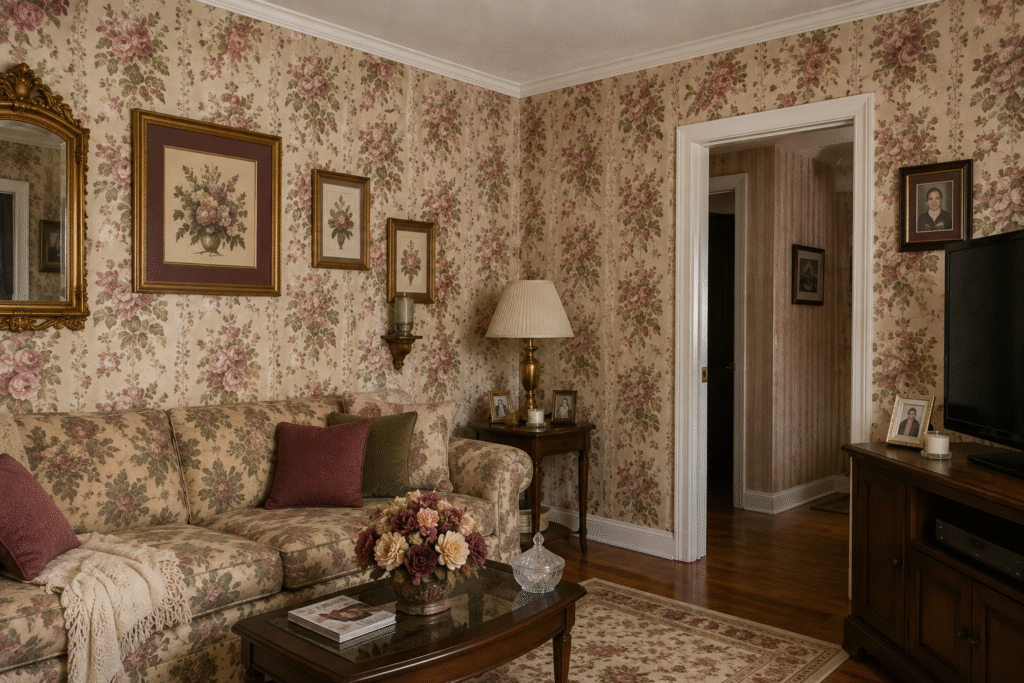
The fix: When in doubt, a paintable grasscloth or a subtle texture ages far better than a bold, trend-driven print.
10. Too Many Throw Pillows, Not Enough Editing
A few well-chosen pillows add comfort. A dozen competing patterns piled onto one sofa is one of the more common forms of tacky living room decor, clutter dressed up as styling.
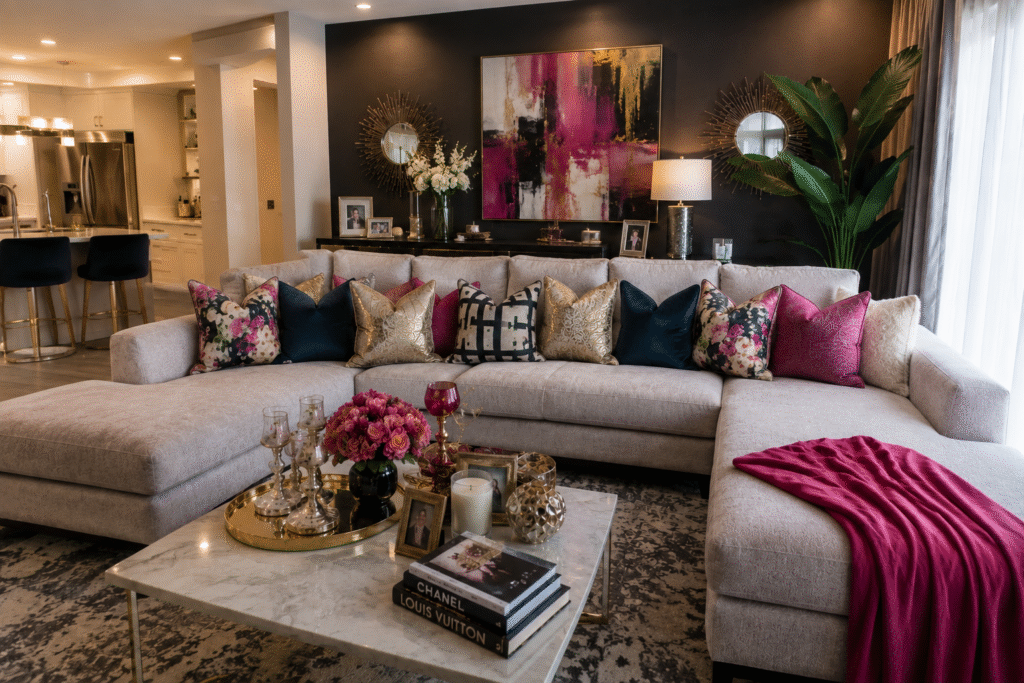
The fix: Three to five pillows, one dominant pattern, everything else in a supporting role.
Tacky Decor vs Curated Decor, at a Glance
| Tacky Decor Signal | Curated Decor Alternative |
| Undersized furniture floating in the room | Furniture scaled to fill the space with intention |
| Matched showroom furniture set | Mixed pieces from different sources and eras |
| One flat paint color, no variation | Color and finish shifting room to room |
| Gallery wall with no theme | One unifying element tying every piece together |
| A dozen mismatched throw pillows | Three to five pillows with one dominant pattern |
When It’s Worth Bringing in a Second Opinion
Most bad interior decorating happens gradually, one purchase at a time, without anyone stepping back to see how the pieces work together. That’s exactly what an interior design consultation is for, a fresh set of eyes from an interior designer catching what’s easy to miss in a room you see every day.
At FFF Interiors, this is one of the most common reasons Lehigh Valley homeowners reach out, not because anything is dramatically wrong, but because the room stopped feeling as good as it used to. FFF Interiors approaches every consultation the same way, identifying the one or two changes that genuinely move the needle rather than recommending a full redo.
Conclusion
Tacky decor is rarely one dramatic mistake. It’s usually a handful of small, disconnected choices, an undersized rug here, a mismatched gallery wall there, that quietly accumulate until the room stops feeling intentional. The fix is almost never starting over. It’s identifying the one or two decisions working against everything else, and correcting those first.
A home doesn’t need to look like a showroom to feel curated. It needs its choices to actually relate to each other, scale, color, material, all working in the same direction instead of competing for attention.