
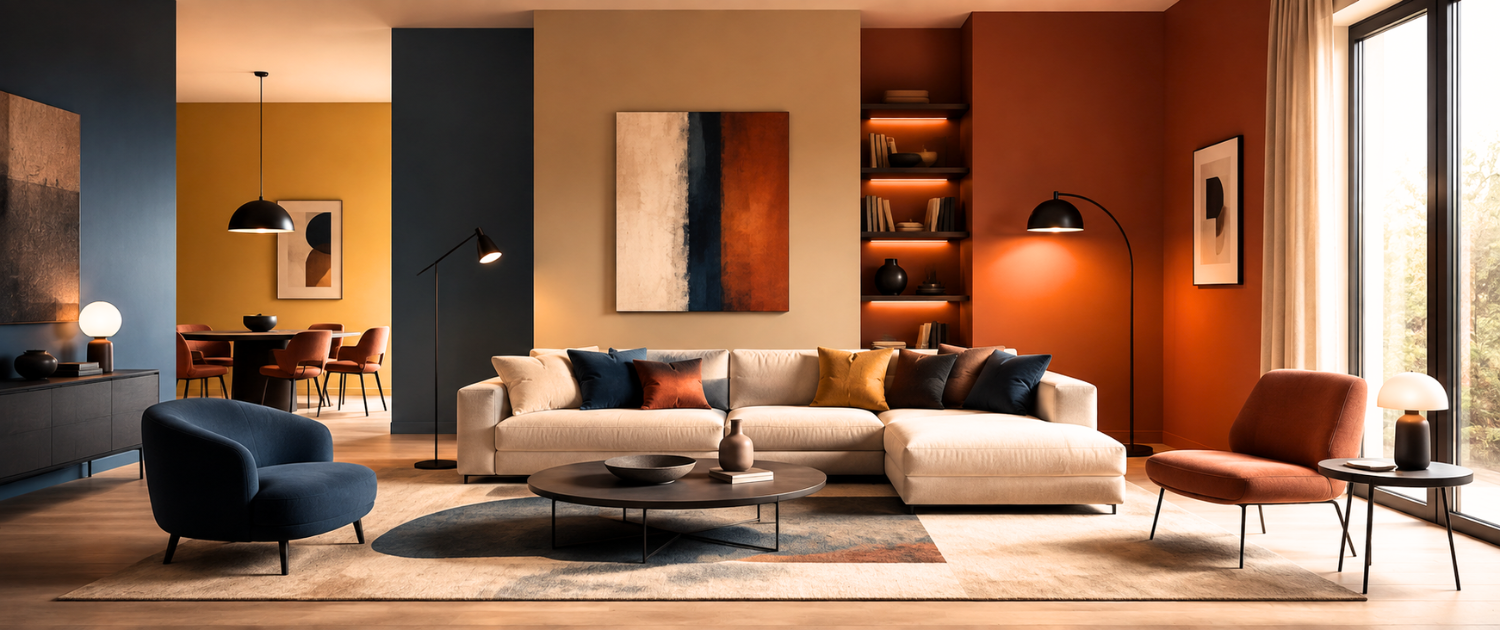
Enter into two rooms with the same furniture and one is relaxed or serene, and the other is a bit tense. The difference is rarely the couch or the coffee table. It comes down to color, light, texture, and how those pieces work together on a level most people never stop to notice. This is the psychology of interior design, and once you understand it, you start seeing why some rooms simply feel right while others never quite settle.
What Is the Psychology of Interior Design?
The psychology of interior design is the study of how color, light, layout, texture, and material choices influence emotion, behavior, and mental state within a space, and how those elements can be used intentionally to create a specific feeling in a room.
This is not abstract theory. It shows up in something as simple as why a small home office painted a flat, cool gray can feel harder to focus in than the same room painted a warm, muted green. Once you start noticing it, the psychology of interior design becomes hard to unsee in your own home.
The Core Elements That Shape How a Room Feels
Color psychology in interior design is the most visible starting point. Warm colors like terracotta and amber tend to energize a space and encourage conversation, which is why they work well in dining rooms. Cool colors, soft blues and sage greens, slow things down and read as calming, which is why bedrooms lean on them so often.
Choosing a Calm Paint Color That Still Feels Intentional
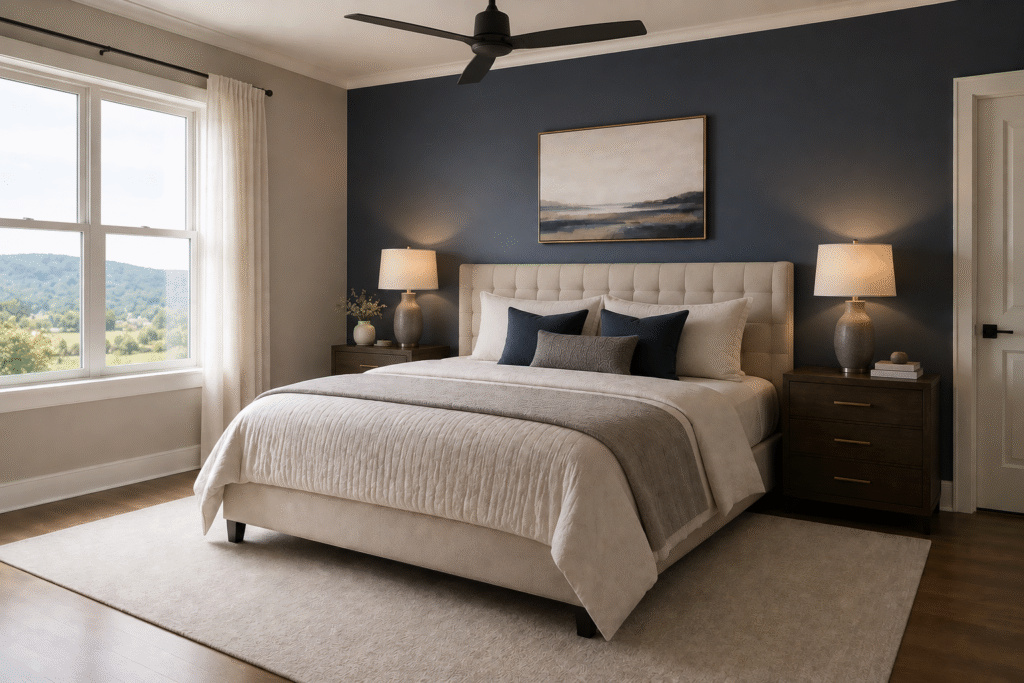
A calm paint color does not need to be timid to work. A deep, muted blue can feel just as restful as a pale one, since it reads as intentional rather than default. The mistake I see most often is homeowners choosing a color because it is trending, without asking how colors affect mood in their own daily routine first.
A few questions worth asking before choosing a color:
- What do I want to feel the moment I walk into this room
- Is this a space for rest, focus, or gathering
- Does this color still work under evening light, not just daylight
This kind of question is at the heart of the psychology of interior design, and it applies just as much to light as it does to color. A single warm accent in an otherwise cool room draws the eye and adds energy without overwhelming the space, which is often more effective than committing an entire room to one saturated tone.
How Light, Layout, and Space Shape the Mind
Color rarely works alone, and lighting in interior design changes how every color actually reads. The same warm color palette can feel cozy under soft, layered lighting and flat under a single harsh overhead fixture.
Why Layered Lighting Changes Everything
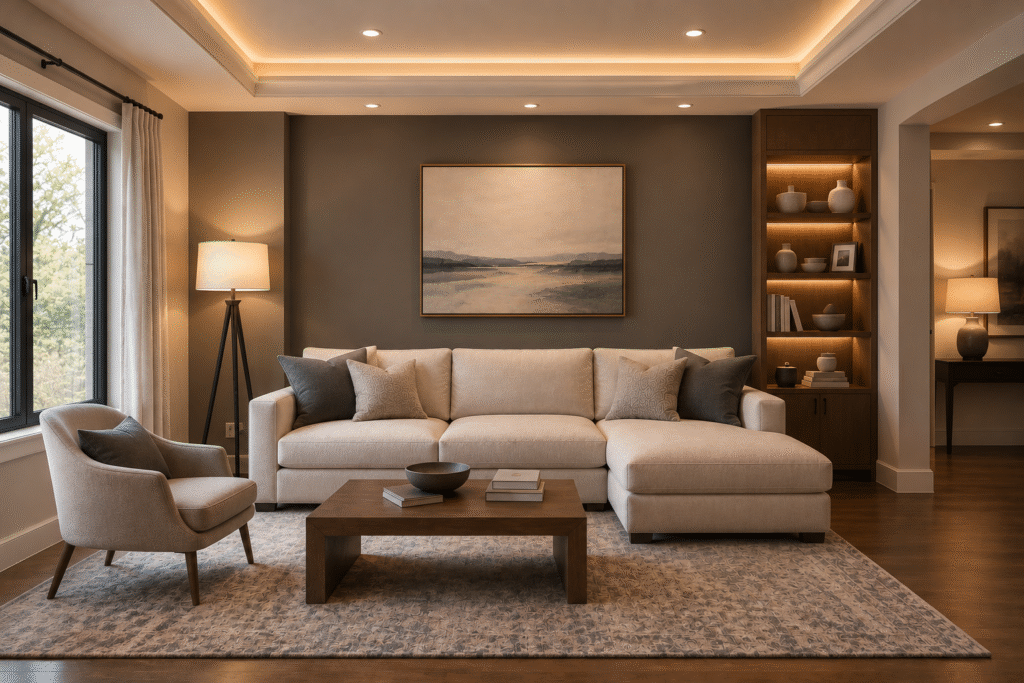
Layered lighting, a mix of ambient, task, and accent sources, gives a room depth a single ceiling light never can. Lighting and mood are closely connected, natural light lifts energy and focus, while warmer, dimmer light in the evening supports rest.
Layout plays a quieter but equally real role. A room where furniture faces a wall instead of creating a gathering point can feel oddly isolating. Room atmosphere is built as much by how people move through a space as it is by the color on the walls.
How to Choose Colors Based on What You Want a Room to Feel Like
Interior design principles around color become much easier to apply once you start with the feeling you want, rather than starting with a color you like and hoping it works.
| Desired Feeling | Color Direction | Best Rooms to Use It |
| Calm and restful | Soft blues, sage green, muted lavender | Bedroom, bathroom |
| Warm and social | Terracotta, amber, warm clay | Living room, dining room |
| Focused and clear | Soft white, warm gray, pale green | Home office, study |
| Grounded and cozy | Deep olive, warm brown, rich navy | Family room, den |
This kind of intentional choice is where a color palette stops being decoration and starts functioning as part of how the room actually works for the people living in it.
Why Materials and Texture Shape Mood Just as Much as Color
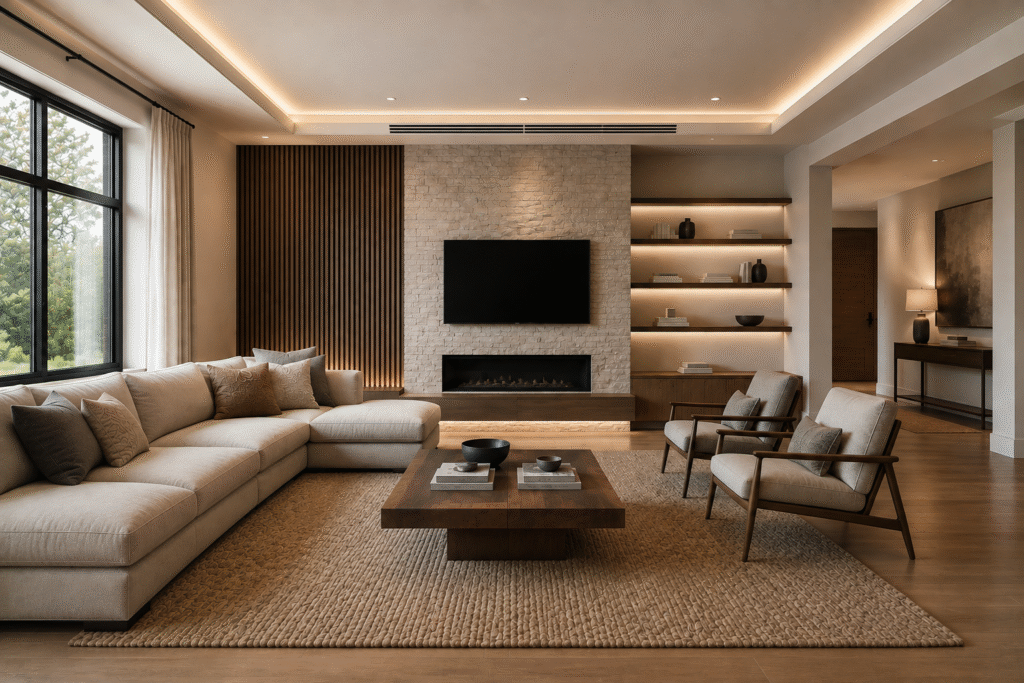
Materials and texture are the piece homeowners overlook most often. A room can have the right paint color and still feel cold if every surface is smooth and reflective. Layering in natural wood, woven textiles, or a heavier wool rug adds warmth color alone cannot deliver, one of the simplest interior design principles to apply immediately.
The way texture affects mood is easy to underestimate, a room full of hard, glossy surfaces reads as busier and colder than the same room with a few soft, tactile layers added in. Material selection also affects how a space sounds, hard surfaces bounce sound while softer materials absorb it. Comfortable living spaces are almost always a layered mix of textures, not one finish repeated throughout.
Bringing the Psychology of Interior Design Into Your Own Home
You do not need to redesign an entire home to feel this. Start with the one room that bothers you most, and ask what you actually want it to feel like.
At FFF Interiors, this is genuinely where every project starts. As an interior designer in the Lehigh Valley, I walk clients through the psychology of interior design before a single paint chip gets pulled, starting with the emotional goal for a space and letting the color, lighting, and material choices follow from there rather than the other way around. FFF Interiors works with homeowners from Allentown through Philadelphia, PA, and the questions are almost always the same, they know something feels off, they just have not had a reason to think about why until someone walks them through it room by room.
Conclusion
The psychology of interior design is not about following a trend. Color psychology in interior design works alongside light, layout, and texture constantly, whether chosen intentionally or not. A room designed with that understanding does more than look good in a photograph, it changes how it feels to spend time there.
Start with the feeling you want a space to create, then let every other decision, the wall color, the lighting plan, the materials on the furniture, support that goal rather than compete with it. That single shift in approach is often the difference between a room that simply looks finished and one that genuinely feels right to live in.