
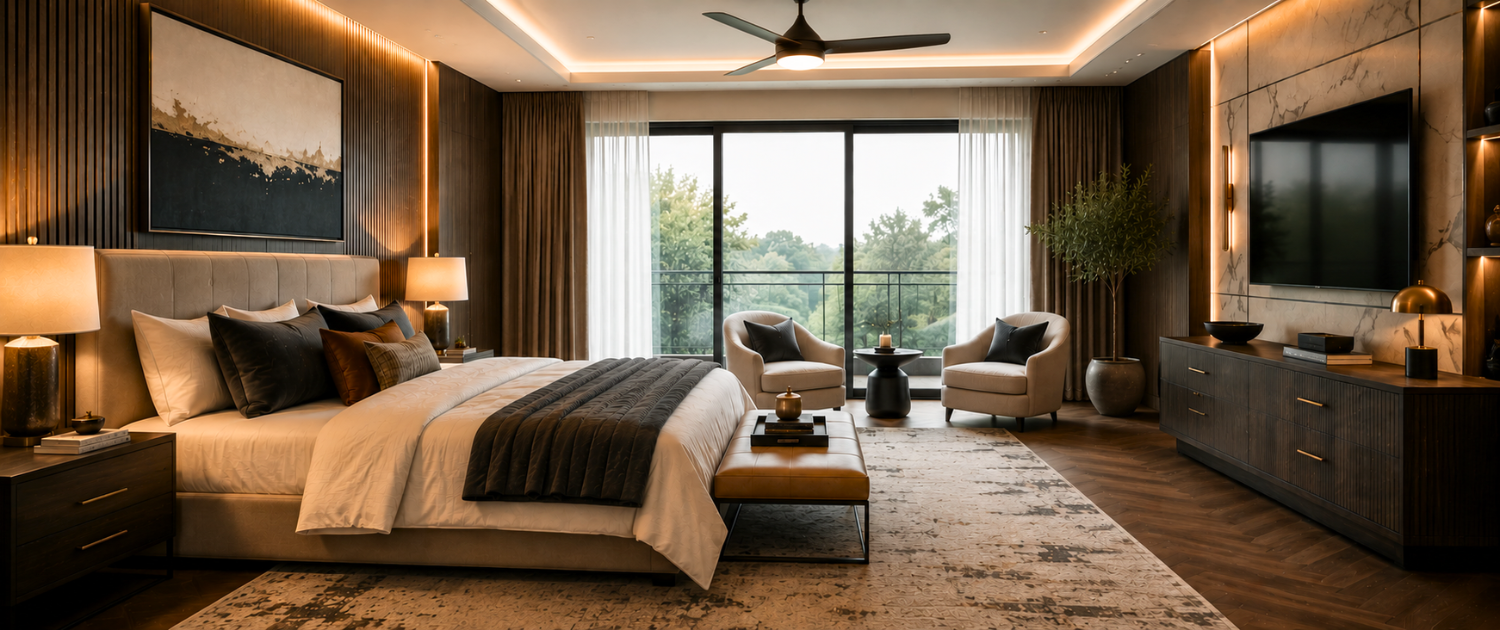
Most homeowners walk into a designer consultation with a Pinterest board and a rough budget. What they rarely bring is clarity on how the room needs to function. The result is a process that starts too late and ends with a space that looks finished but does not feel right to live in.
The planning you do before hiring a designer determines the quality of every decision that follows.
Q: What should I decide before starting a master bedroom design project?
Before hiring a designer, clarify how you use the bedroom beyond sleeping: whether you need a reading zone, workspace, or dressing area. Decide on your non-negotiables around storage, lighting, and layout. Know your realistic budget. A designer works best when the brief is clear from the first conversation.
Master bedroom design is one of the most personal projects in a home renovation. Unlike shared spaces, it serves one household’s specific rhythms: how you wake, wind down, how much storage you need. Getting those details clear before a designer is involved saves time, money, and the frustration of mid-project revisions.
Start With How You Actually Use the Space
The most useful thing you can bring to a first consultation is an honest description of how you use the room now. Most master bedrooms are asked to do more than sleep:
- A dedicated dressing and grooming zone separate from the bathroom
- A reading corner or quiet seating area away from shared living spaces
- A compact workspace that can be visually closed off at the end of the day
- A morning coffee spot or personal retreat separate from the main kitchen
Defining secondary zones within the master bedroom layout, like a seating perch near a window or a reading corner beside a floor lamp, adds function and intention. Knowing which apply to your household shapes the floor plan before any furniture is selected.
Clarify Your Storage Requirements Before the Layout
Storage is where master bedroom design most commonly fails. Homeowners underestimate how much they need and the layout gets locked in before that reality becomes clear.
Before meeting a designer, audit what you currently store in the bedroom. Walk-in closet versus built-in wardrobe versus freestanding furniture each requires different floor plan allocations. Smart storage including built-in wardrobes and floating drawers streamlines a bedroom and creates visual clarity that makes even a modest room feel considered. Deciding on storage approach first prevents the most common layout mistake: committing to a furniture arrangement that cannot accommodate how you actually live.
Understand Bedroom Lighting Design Before You Brief Anyone
Lighting is the most overlooked planning decision and the one that costs the most to fix after the fact. If the lighting plan is not locked in before walls are closed, adding it later means reopening them. Bedroom lighting design should plan for at least three types:
- Ambient lighting from a ceiling source that sets the overall tone without being harsh
- Task lighting at bedside level for reading without disturbing a partner
- Accent lighting that highlights architectural features or creates mood after dark
Smart technology including circadian lighting requires planning the electrical infrastructure before any finish decisions are made.
Master Bedroom Design Planning Checklist
Bring answers to these before the first conversation:
| Decision | Why It Matters Before the Design Process |
| Primary and secondary room functions | Determines layout zones and square footage allocation |
| Storage type and volume | Affects wall usage and furniture placement from the start |
| Lighting plan including electrical needs | Must be decided before walls are closed in renovation |
| Bed size and placement preference | Anchors the entire master bedroom layout |
| Natural light sources and window treatments | Affects material and color choices throughout |
| Style direction or non-negotiables | Gives the designer a brief to work within |
| Budget split between construction and furnishing | Prevents overspend in one area that limits the other |
Clarity on these seven points reduces the likelihood of expensive mid-project changes significantly.
What to Expect From the Design Process
Once planning decisions are in place, a designer builds a cohesive direction around them. In 2026, master bedroom interior design is moving toward layered, tactile spaces that feel personal rather than styled. The prevailing direction is cocooning: a genuine sanctuary separated from shared living spaces and designed entirely for rest.
That translates into material choices, color palettes, furniture scale, and how space optimization is approached across the full floor plan. For homeowners rethinking how the bedroom connects to adjacent spaces, the broken floor plan guide covers how those layout decisions affect the bedroom’s position and flow.
Conclusion
The most successful master bedroom design projects start before the designer enters the room. Clarity on how the space is used, what storage it needs, how it should be lit, and what it must deliver gives a designer the brief they need to produce a result that actually works. If you are planning a bedroom renovation, FFF Interiors offers design consultations for homeowners across Allentown PA and the Lehigh Valley. Our process at FFF Interiors starts with exactly the planning decisions covered here, ensuring every design choice is grounded in how you actually live.