Think about the last restaurant you truly loved. The one you brought friends to, posted about, and kept returning to. Chances are the food was great-but that is not the only reason you went back. The space made you feel something. The lighting was right. The atmosphere pulled you in. The entire environment told you, without a single word, that this place was worth your time.
That is the power of intentional restaurant interior design. In 2026, American diners are making choices based on experience as much as cuisine. A beautifully executed dish served in a forgettable, poorly designed space will always lose ground to a good meal served in an environment that feels alive, comfortable, and worth sharing. The gap between a restaurant that survives and one that thrives is often not the kitchen-it is the dining room.
At FFF Interiors, we work with restaurant owners who are ready to close that gap-building spaces that do not just look good but actively drive customer loyalty, longer visits, and stronger revenue.
Common Question Asked
Q: How does restaurant interior design increase sales and revenue?
Every design decision in a restaurant either adds to revenue or quietly takes from it. The right lighting keeps guests at the table longer. The right seating makes them comfortable enough to order another round. The right atmosphere builds the kind of emotional connection that turns a first visit into a weekly habit. That is how design drives sales-not by looking good, but by making guests feel good enough to stay, spend, and come back.
Define the Experience Before You Design the Space
Every successful restaurant starts with a clear answer to one question-how do you want your guests to feel? Not what you want the space to look like. How you want it to feel. Energetic and social? Calm and intimate? Warm and neighborhood-familiar?
That answer drives every design decision that follows. Without it, spaces end up as a collection of individual choices that never quite come together. Modern restaurant interior design ideas that consistently perform well all share one thing-a defined experience that every element of the space is built to deliver.
Lighting Is the Atmosphere, Not Just the Illumination
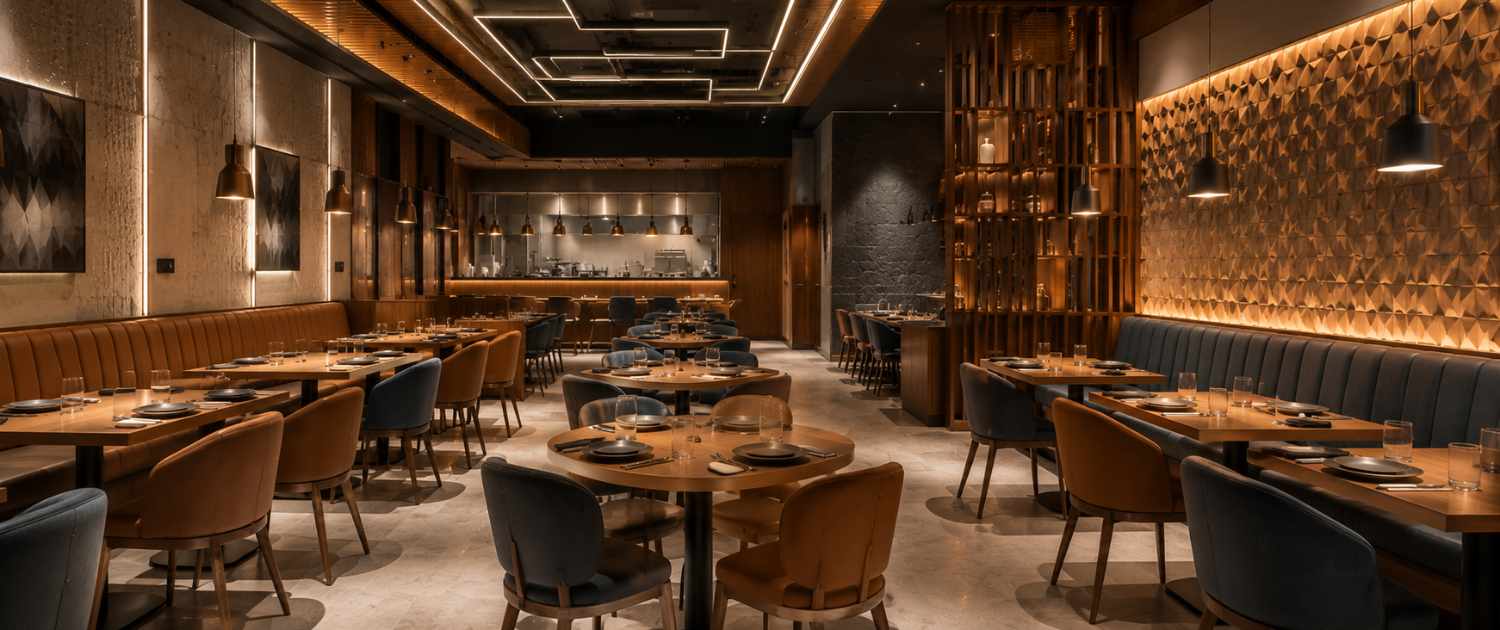
Lighting shapes mood faster than any other design element in a restaurant. Walk into a space with flat, bright overhead lighting and the atmosphere disappears immediately. Walk into a room with warm, layered lighting and you want to sit down before you have even seen the menu.
The most effective approach layers ambient, accent, and task lighting together. Pendant fixtures above tables, warm sconces along walls, and dimmable overhead systems give you full control over how the space feels at any hour. This single investment consistently delivers one of the highest returns in restaurant design services-because it transforms atmosphere without requiring a structural change.
Floor Plan Design That Serves Guests and Staff Equally
A restaurant floor plan that works only for capacity-not for comfort or flow-creates friction at every level. Guests feel cramped. Staff cannot move efficiently. The overall experience suffers regardless of how good the food is.
Effective restaurant interior design always plans for movement first. Clear pathways from entrance to table. Unobstructed service routes between kitchen and dining room. Comfortable spacing between seats that signals quality rather than overcrowding. When the layout works for everyone in the room, the entire experience improves.
Build a Visual Identity That Guests Remember
A restaurant without a clear visual identity is a restaurant that customers struggle to describe and a space they are unlikely to recommend. Color palette, materials, signage, lighting, and furniture all need to speak the same design language consistently throughout the space.
This is where working with experienced commercial designers makes a measurable difference. A unified visual identity does not happen by selecting individual pieces that look good in isolation. It happens when every element is chosen as part of a single, cohesive story that reflects the brand, the menu, and the customer experience the restaurant is built to deliver.
Create a Signature Moment Worth Sharing
In 2026, one of the most valuable assets a restaurant can have is a design feature that guests photograph and share. A custom mural, a dramatic bar installation, a uniquely designed ceiling, or a beautifully lit entrance feature-these elements function as organic marketing that no paid campaign can replicate.
The key is intentionality. A signature moment that aligns with the restaurant’s visual identity becomes part of the brand. Guests tag the location, share the image, and drive awareness to audiences the restaurant could never reach through traditional advertising alone.
Seating Variety That Welcomes Every Type of Guest
Solo diners, couples, families, and business groups all have different spatial needs. A restaurant that offers only one seating configuration will always feel right for some guests and wrong for others.
Mixing bar seating, intimate two-tops, comfortable booths, and flexible larger tables gives every type of guest an option that suits them. This approach is one of the most practical restaurant design ideas for owners who want to serve a broad customer base without sacrificing atmosphere or comfort for any of them.
Acoustic Design That Keeps Guests Comfortable
Noise consistently ranks among the top complaints in restaurant reviews across the United States. A space where conversation is difficult is a space where guests cut their visit short regardless of how good the food is.
Hard surfaces amplify sound. Upholstered seating, acoustic ceiling panels, area rugs, and fabric wall treatments all absorb it. Good acoustic design is invisible when done well-guests simply feel comfortable without knowing why. That comfort keeps them at the table longer, which directly increases average spend per visit.
Materials and Finishes That Reflect Brand Quality
The materials in a restaurant communicate quality before a single dish is served. Warm wood tones, natural stone surfaces, quality upholstery, and considered hardware all signal that attention was paid to every detail.
Consistency across materials is essential. A space where finishes feel mismatched or randomly selected undermines the overall brand perception-even when individual elements look good on their own. Every surface a guest touches or sees should feel like it belongs to the same considered design story.
Design the Entrance to Set the Right Expectation
The entrance of a restaurant is the first physical expression of the brand. It sets the expectation for everything that follows-before the guest is seated, before they see the menu, before any food arrives.
A well-designed entrance with intentional lighting, clear signage, and a welcoming host area immediately communicates that this is a space worth being in. Restaurants that invest in this first impression consistently outperform competitors who treat the entrance as a functional necessity rather than a design opportunity.
Use 3D Visualization Before Committing to Any Design Decision
One of the most valuable tools available to restaurant owners today is the ability to see a finished space before anything is built. Working with a 3D restaurant interior designer allows owners to preview layouts, material combinations, lighting conditions, and furniture placement in photorealistic detail before a single purchase is made.
This process eliminates costly mistakes, speeds up decision-making, and ensures the finished space aligns with the original vision. For restaurant owners across the region-including those exploring commercial interior design Philadelphia as a reference point for high-performing hospitality spaces-3D visualization is now a standard part of any serious design process. A qualified restaurant interior designer brings this capability together with the spatial planning and brand alignment expertise needed to make every decision count.
Why Design Is Now as Important as the Menu
The data is clear. Diners in 2026 are choosing restaurants based on experience as much as cuisine. A space that feels intentional, comfortable, and visually compelling drives longer visits, higher spend, and stronger loyalty than a space that relies entirely on the kitchen to carry the experience.
Restaurant design services that address layout, lighting, acoustics, visual identity, and material quality together-rather than as isolated decisions-consistently deliver spaces that perform better across every business metric that matters.
Conclusion
Great food will always be the foundation of a successful restaurant. But in 2026, it is no longer enough on its own. The dining environment has become an equal part of the experience- shaping how customers feel, how long they stay, and whether they come back.
By investing in restaurant interior design that is intentional, cohesive, and built around the customer experience, restaurant owners across Allentown and the Lehigh Valley can build spaces that do far more than impress on opening night. They create environments that consistently attract customers, generate loyalty, and drive the kind of revenue that sustains a business long term.